
Why We Built the Closed-Loop Protocol
The standard for consumer electronics repair has remained stagnant for over a decade. Opaque back-rooms, unverified diagnostic claims, and questionable part resourcing form the bedrock of local repair establishments. At Fixly, our engineers sought to mathematically eliminate consumer anxiety by routing the entire repair protocol through a transparent visual engine.
The Optical Validation Matrix
Rather than asking you to blindly hand over an intricately personal piece of digital hardware, we codified trust into a three-step validation framework powered by high-resolution robotics.
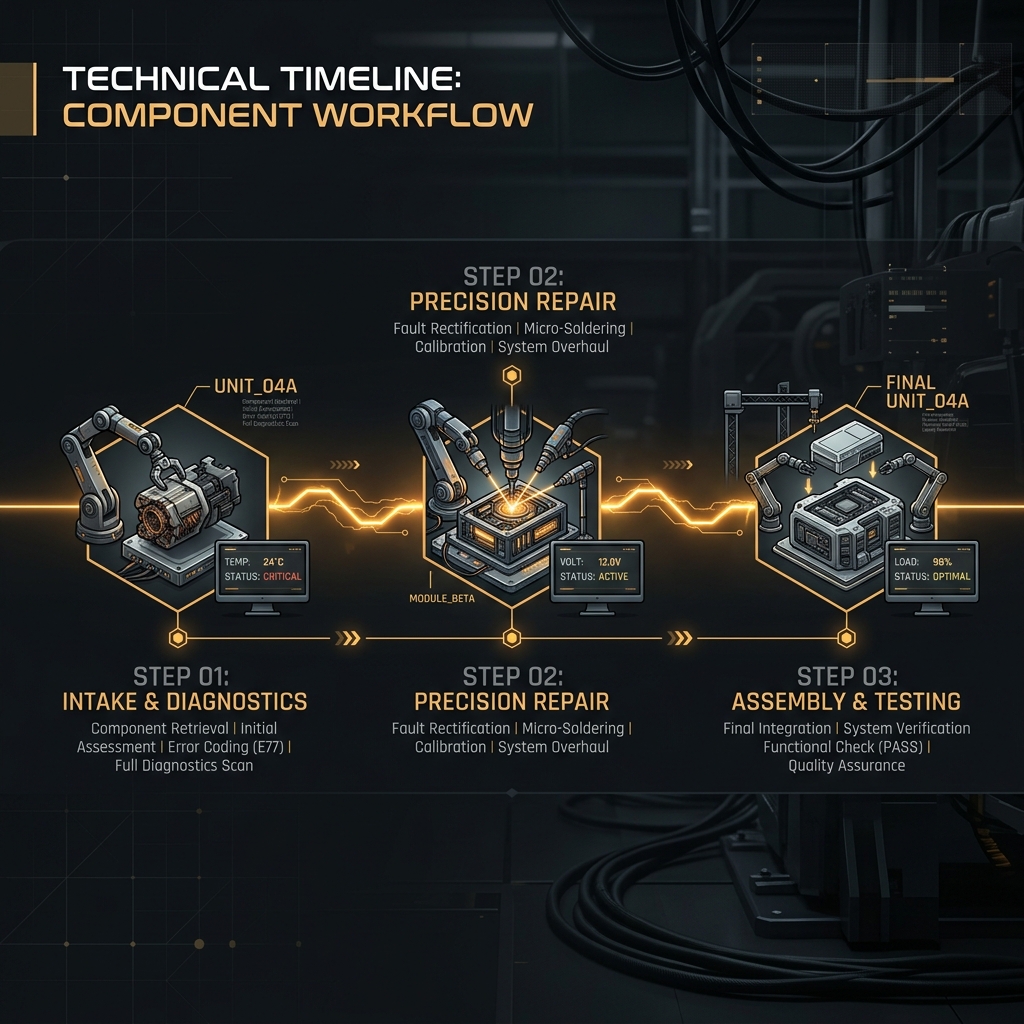
This operational pipeline enforces a strict zero-trust baseline for our own technicians. Every action requires photographic logging before the system permits procedural advancement.
Phase Benchmarks
High-resolution exterior mapping to freeze the condition of the chassis before a single tool is engaged. Verifies existing scuffs.
Visual confirmation of internal degradation, liquid damage traps (LCI inspection), and the exact component payload slated for removal.
Precision Robotics
Our intake benches are equipped with sub-millimeter macro lenses. We document the motherboard logic gates to ensure absolute integrity during the bridging process.

Core Philosophy"Transparency isn't a marketing angle. It’s a structural requisite for handling modern computational hardware."
As edge computing devices become more central to daily operational flow, treating them like disposable accessories is no longer viable. Extending hardware lifecycle through precise, verified engineering repair isn't just financially optimal—it's a critical sustainability mandate.